Amazon.com Widgets
Subscribe by Email  |  Subscribe Subscribe
Because when you're out on the course, all that's there is your internal monolog

Archives for Geek Out! category


 Powered by Max Banner Ads 

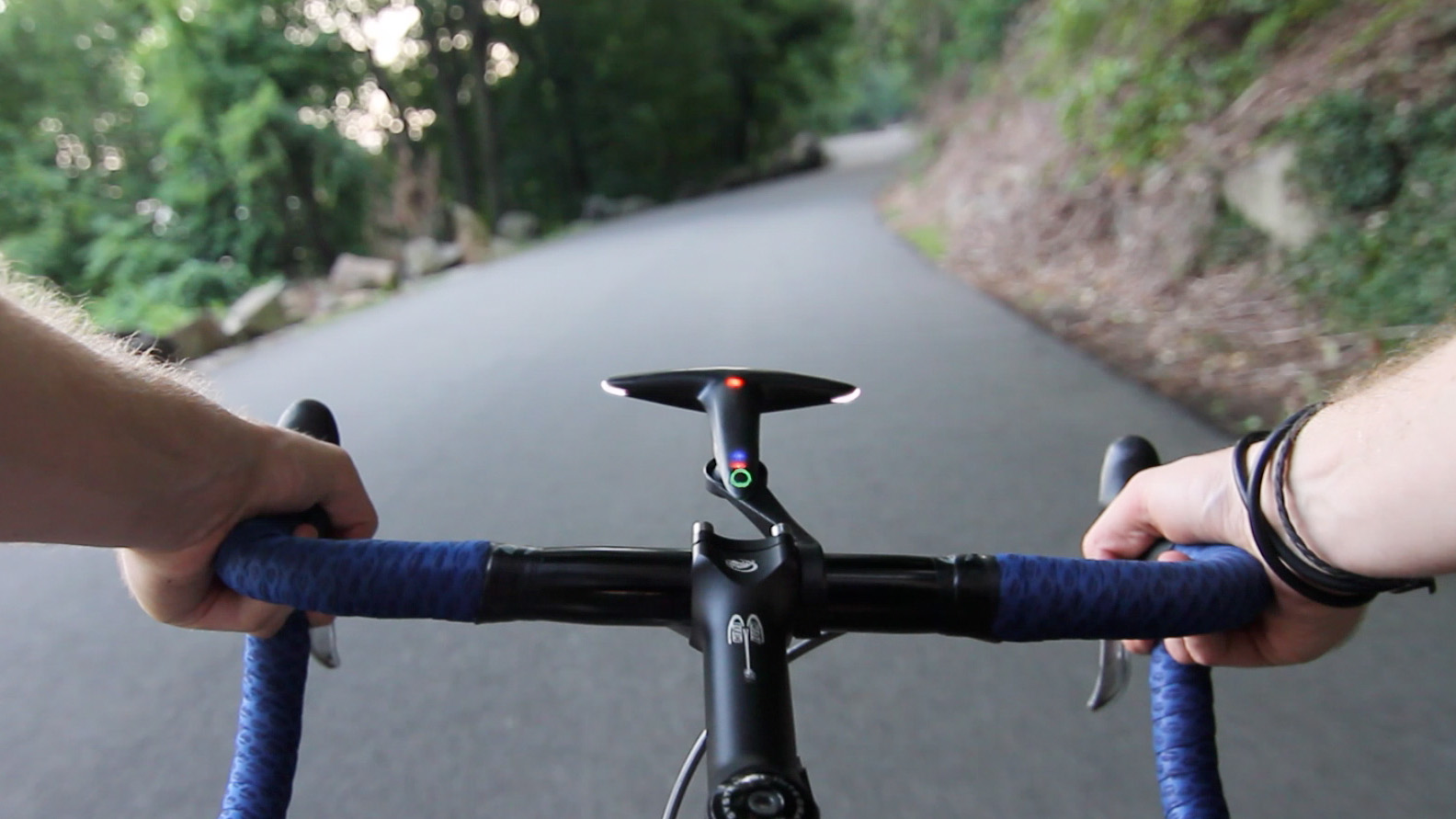
Just before I went to Panama a box containing a beta unit of the Sportiiiis Heads Up Display for Athletes arrived at my door.  The timing couldn’t have been better for me to give the device a thorough testing in my lead up and racing in Ironman 70.3 Panama.

NewImage

I’m happy to say that the Sportiiiis are… well… AWESOME!  They performed flawlessly in both my training in Panama and racing.

When I first unpacked the unit and installed the software, I experienced a few early-release glitches with the software/firmware and a corruption of the audio prompting on the device.  A subsequent update of the firmware and software resolved these problems, polished the desktop software and since then I’ve had absolutely no issues with the device.

Using the desktop software you can set target ranges for power, cadence, heart rate and speed for bike and run modes.  Using the capacitive touch button and a tap-selector as your 2 input methods you can change what the unit is reporting, the mode or get an immediate report of your current output in the sensor it’s monitoring.

SI GUI+iPhone


Because of the minimalistic interface it takes a little practice and memory work to remember how to interact with the Sportiiiis, to change modes and settings.  I, also, initially found the touch sensor a bit difficult to find and interact with consistently, but like drinking from a water bottle when riding, it just takes a little practice and development of personal style ;)

The Sportiiiis reports to you in 2 outputs: a row of 5 7 coloured LEDs on the boom in your peripheral view and also through a mini-speaker at the back of the unit.  The speaker alerts you audibly if you’re out of zone and, at a configurable interval, reports the values for all the sensors the Sportiiiis is monitoring.

The Sportiiiis generated a fair bit of interest during IMPanama.  I showed them to a number of athletes and a couple of the race officials.  The race officials initially thought that they may be illegal because they thought that the Sportiiiis would act as a pace coach (beeping off a cadence to take), but once I explained to them that the sportiiiis were just a reporting device (like a Garmin watch), and they were satisfied that the speaker did not obscure your hearing or prevent any kind of coaching advise or safety hazard, they were happy with the Sportiiiis and thought they were pretty neat!  [yes that was a bit of a tense few minutes of explanation :) ]

One thing I really love about the Sportiiiis is that my Garmin becomes a data recorder and the Sportiiiis replace it for current output display.  This gives me 2 things: race-day backup (if the Sportiiiis or Garmin crap-out during a race, I still have the other for pacing/monitoring output), not having to take my eyes off the road when riding or running to find, focus on and process the information on the little Garmin display.  Both big plusses in my books.  [Edit: Also 4iiiis tells me that in the future they'll be recording data from the various ANT+ tethered devices and be able to upload that data to sites like TrainingPeaks.com (that's pretty neat!).]

Sportiiiis are now available from their website, I love them, and think that anyone who trains and/or races based on data rather than feel will love them too!

Joe Friel – More on Power Meters

Another great article from Joe Friel on the importance of training on the bike with power.

Joe Friel – More on Power Meters.

And, by the way, I still have a power meter for sale.  Leave me a comment with your contact info if you’re interested.

IMPanama Countdown: Day 12: Garmin 910XT Initial Impressions

With some patience and perseverance I managed to score myself a Garmin 910xt with a heart rate strap.  I was on the fence about these units until I started to research the battery life with the GPS on: 16 hours in pretty amazing in my mind.

DC Rainmaker has done his normal, stellar job of a detailed review of the Garmin 910xt and I won’t replicate it or even try to here.  See his blog for all that in depth content.  It really is extremely well done and well worth the read.   In general, if you’re looking at gear, check his site, he does an amazing job reviewing gear at a depth level that I sometimes have a hard time consuming, never mind producing! :)

What I’ll give you here are my initial impressions of the 910… kind of a reader’s digest view of the Rainmaker review if you will :)

Likes

  • Pool swim mode: it’s nice to be able to collapse 2 devices (swimsense and 310xt) into 1.  The pool mode works well and the screen is much easier to read than that of the swimsense
  • Battery life is stellar. Though I haven’t tested it yet, the quoted specs are great!
  • GPS sensitivity feels much better than the 310′s: it seems to find satellites faster and keep lock in poor weather better
  • Has “Training Effect”, which I haven’t currently used, but will explore (TSS is, in theory, coming soon and I’ll look forward to that for sure)
  • Because the 910xt is ANT+, all of my existing ANT+ devices “just work”

Dislikes

  • The smallest pool length it allows for is 20m.  My neighbourhood’s YMCA’s pool is 18m.  Hopefully a future firmware update relaxes the 20m limit.  I can’t see any good reason for it to persist.
  • It appears that in order to upload swim workouts to TrainingPeaks I have to export them from Garmin Connect and then manually import them to TrainingPeaks.  This is pretty clunky and hopefully new releases of TrainingPeaks device agent or the Garmin ANT Agent resolve this
  • No Heart Rate data on the swim.  Currently Polar is the only manufacturer of a strap-based HRM that transmits on frequencies that can be received in the water.  Why Garmin doesn’t do similar is beyond me.

Curiosities

  • I have the quick release for the 310xt and anticipate getting it for the 910xt, though given the size of the 910 adding the quick release may just make it too unwieldy
  • I’m really curious about the battery extender, though given the published battery life expectancies, you’d only need this additional battery life if you were doing ultraman or some other super-long event.

In Summary

If you’re a data addicted triathlete, like me, this is probably the closest to the ultimate training watch on the market today.  I can’t imagine you regretting the purchase.  Shame about the backlog but I know that Garmin is working hard to get caught up.

Enhanced by Zemanta

Some count 7, others 4, yesterday talking to a buddy, I came up with 9 distinct disciplines of long course triathlon training: Swim, Bike, Run (the obvious 3), Nutrition (everyone includes this), Rest/Recovery, Work/Life Balance, Stretching and Cross-training, Mental Preparedness and Education.  You may agree or disagree with my categories but lets walk through them.

Swim, Bike and Run: won’t spend any time here.  We all know that you need to train to perform.  2 pieces of sage advice that I’ve heard around these: Train your weakest sport, race your strongest (obvious, but so many people avoid their weak sport and train their strenght, what’s that!?) and The definition of crazy is repeating the same actions expecting different results (you have to mix up your training or you’ll plateau – again obvious, but frequently overlooked).

Nutrition: A great deal has been written on nutrition.  I’ll follow later in this series with my personal nutrition practices and beliefs.  Too much to say here for an article on “many disciplines”.  Stay tuned.

Rest/Recovery: I never used to “get” rest/recovery days.  I thought “I’m not tired.  I’m ready to go!  Why am I sitting around?!  This is dumb!”  Well through this last cycle of training I started to not only understand, but to look forward to rest days.  The program I’ve been working on with my coach Ian McLean (owner of imfit.ca) has had me doing power and tempo work on Tuesday, Wednesday, Thursday and longer duration endurance workouts on Saturday and Sunday.  Providing a rest day on Monday and Friday.  With the intensity of these last few build cycles, those rest days were welcome.  In fact, even after the single rest days I could still feel some fatigue from the previous workouts.  I can only imagine how poor my performance would be without the rest!

Work/Life Balance: I’m not a pro triathlete, I wish I was.  I’m not independently wealthy, a lottery winner, or a trust-fund kid (if anyone would like to provide me ongoing financial aide without any repayment obligation, I’m all ears: go!).  I have a spouse,  job, a house and mortgage, pets, bills, renovations to do, etc. etc. etc.   It’s important to make sure that you, as an age grouper, are fitting your training into your life, not fitting your life into your training.  As training ramps up close to a race this may invert, but take care to restore the balance after the event.  You may have to play catchup at work or at home to make up for your distractions as you got closer to the big day.  Make sure you keep an eye on that balance.  For me, I typically try to do my training very early while Kim sleeps, or when she’s at work, leaving us quality time together.

Stretching and Cross-training: Maybe this should be 2 disciplines, unsure.  I’ve found 2 things as I train and race: the muscles I use get tight, the muscles I don’t use get weak.  This is the perfect equation for muscle imbalance injuries!  Think about it – just think about your arms: you swim, bike and run.  Swim, pulling on the water/pulling yourself through the water – key word here “pulling”. Bike, arms largely unused, but if anything you’re pulling on the bars – again “pull”. Run, your arms are counterweights and typically just gently locked in a position and swinging from the shoulders – not pulling, but still fatiguing the “pull muscles” to keep your arm bent for hours at at time.  Ever get elbow pain or forearm pain near the elbow?  For me, this indicates that I’ve not been cross-training the contrary-muscles enough to keep balance in the joint.  The same is true for run muscles, swim muscles and never overlook the benefits of a strengthened core (everything from below your pectoral muscles to your butt). Stretching, for me, is about releasing that contrary, constant, imbalanced strain: as you strengthen muscles will tend to shorten, you need to keep them stretched and long, while building that strength.  Stretching is a necessary part of any conditioning program where you need to preserve functional movement.  I’ve lately been doing Active Release Technique Therapy with Dr Tyler Linn at The Performance Health Center twice a week and have noticed great improvements in flexibility and recovery.

Mental Preparedness: Perhaps also mental toughness.  Here I refer to a few things: having a mental game plan for “the day”: how will I handle “situation x” when things aren’t going perfectly; but also, mental toughness to get out in the rain, snow, sun, heat, etc.  to go out when you’re tired and not “feeling it”.  Chrissie Wellington and others have written a great deal on this. The toughness to have the discipline to keep to your plan, to race your plan, to keep your food log, to stick to your training program, to not lie to yourself.   This can be a hard one for some people (myself included at times). Our ability to rationalize is incredible, as we get older (like older that 5) we can do this pretty effectively, especially to ourselves.  Personally, I find “black and white rules” work super well for me.

And finally Education: you are a laboratory of 1.  What works for me may not (likely won’t) work for you. My nutrition choices may not be yours.  My running gait and style may work for me, but not you.  My training program may work for me, but not for you.  There may be new research released that indicates a better approach to some other discipline, you can educate yourself and choose to try it or not.  All I’m saying here is that there is no 1 true and only way.  Your approach and needs will change over time.  Staying up to date with new products, research, training approaches, etc. gives you options.  You may choose to incorporate or experiment with the new to see if it works (better) for you, or just put it aside because you’re happy with your current approach.  It’s just good to have the choice.  There are so many great resources available to athletes now from youtube, podcasts and blogs, online coaches, magazines, etc. There’s really no excuse.

As I said earlier, your mileage may vary with these groupings.  They make sense to me :)

Enhanced by Zemanta

IM70.3 Panama Bike Course for Computrainer

Some folks were asking for this.  It’s not 100% accurate and it’s the old bike course (not the new one that was posted late in 2011, early 2012) that is apparently less hilly, but it’ll give you a feel for the ride.   I’ll post the updated .3dc file once I get the new .gpx data for the route.  (Hopefully soon.).

The file has 3 .3dc files in it – they’re all similar, but slightly different.  None is perfect :)  [Just want to set appropriate expectations].  One thing you’ll note is that they’re all a bit long (120k rather than 90), just jump 15k in and stop 15k before the end if you care :)

Enjoy. Rick…

panama.zip

Enhanced by Zemanta

Loving My Computrainer

Wow!  My computrainer is such a great tool.  I definitely need to post a real ™ review of it, but for now.  Here is a copy of the .3dc file for the Ironman Mont Tremblant course for those of you who are looking for something like this.

Enjoy!  I know I have been.  Especially loving the 12% grade climbs!  Booya!!!

IMMT.3dc


I haven’t had a chance to really check this out yet, but just found it on Finis’ blog and it looks amazing!  Especially if you aren’t fortunate enough to have a swim coach or a coach with specific strength around swimming.

We all know that the swim is all about technique and being relaxed in the water, and that (because for the most part you can’t see yourself while you’re swimming) fixing technique can be super-difficult.  This new offering from Finis looks to be just the ticket!

Check it out!

FINIS Announces Stroke Lab®, An Online Swimming Analysis Tool | The FINIS Blog.

Product Review: Finis Aquapulse

I have to admit, when the aquapulse was 1st announced I got pretty excited: I’m all about training with data and in the pool I’d always felt that I was “data blind” especially when compared to cycling and running.   Enter the Aquapulse:

The Aquapulse clips onto the strap of your swim goggles and onto your earlobe.  It uses a beam of light through your lobe to sense your heart-rate and speaks it via bone conduction into your head.

I tested the Aquapulse in my masters swim class over the last few weeks and I have to say, I’m pretty impressed:

  • One of my 1st concerns was that I had pierced ears. Not just pierced, but pierced and once stretched to .75″ holes.  The holes have since shrunk, but I hardly have “normal” ear-lobes.  I wondered how the sensor would work on my deformed lobes.  I was happily surprised that there was absolutely no issue having the Aquapulse find and track my pulse.  I did spend a little time making sure the sensor was over flesh and not air, but otherwise it was just clip and go.
  • Comparing the Aquapulse to the heart-rate telemetry from my Polar RCX5 and to fingers on the wrist/eyes on the clock,  I found it very accurate.
  • I already wear swim goggles (and I assume you do as well, if not you would probably prefer a watch-style device) and found the Aquapulse more swimmer friendly than a heart-rate watch and chest strap.  Its audible reporting of pulse avoids having to interrupt your stroke to check your pulse and allows you to adjust your intensity mid-set based on its prompting.  I also find the chest straps annoying when doing pure swim workouts and that flip turns would frequently dislodge the strap.  Further, we aren’t allowed to wear watches in our masters swim class but there’s no issue with a mask-strap-attached device.
  • I wear earplugs when I swim and the bone conduction is awesome (similar to the swimp3).  In fact, with the earplugs I find the bone conduction better than without, probably due to the lack of other external competing noise.  I did find the diction took a little time to get used to, but after 20-30 minutes of listening to the Aquapulse, you get to understand how it “speaks” and life is good.
  • The battery life is great.  I charged the device when I first received it, have used it for roughly 6 hours on that initial charge and its still going strong.  I’m not sure how long the battery is supposed to last, but at over 6 hours that’s amazing.

In all, I think the Aquapulse is a great training aide.  (Like so many of Finis’ products.) It’s well thought out, easy to use, and provides useful, timely and valuable feedback to the athlete while they train.  No, you’re not likely to use it in a race environment (like you may with a multi-sport wrist-computer), but as a purpose built training aide, it has no rival.

Sorry for the silence…

Hey Folks! Sorry for the radio silence of late. A couple of quick tid-bits and more to come soon.

1) I’m injured. There I said it.. and it freaking sucks! My trail run 1/2 marathon in Palo Alto a few weeks ago, combined with all the walking I did while in the Bay Area, strained a hip flexor and developed a condition called “hip click syndrome”. Technical eh? It’s a bursitis of the hip flexor tendons that actually causes clicking when I lower my knee from a raised position. Running (well walking for that matter) has been completely wiped out and only in the last few days have I been able to walk about 2k without pain. Swimming has been ok, provided I haven’t kicked, and fortunately cycling has been unaffected.

The good news is that it does seem to be improving. Hopefully in the next week or so, I can start adding small runs back into my training schedule.

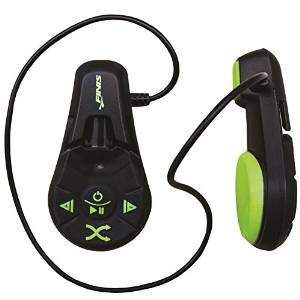
2) In the mail the other day a package from Finis arrived with an Aquapulse, a Swimsense, a swim cap and set of goggles. I’ve been testing the aquapulse in my masters swim classes and will be posting a comprehensive review over the weekend.

Garmin 310XT: Review?

After my review of the Polar RCX5, a number of you reached out to me asking my opinions on the Garmin 310XT.

I’ve been trying to reach Garmin to setup an evaluation, but, to date, they’ve been unresponsive.  If anyone has a contact at Garmin’s marketing dept who could help get this going, it’d be appreciated.

From the specs online the 310XT looks interesting and none of the 3 devices I’ve looked at is a perfect solution for the multi-sport athlete.  I’d really like to see how the 310XT measures up.  Anybody?

Switch to our mobile site